


They suit track riding, practice sessions, and places with strict noise rules. They feel fast, smooth, and modern.
I will map the key traits, compare gas and electric, match riders, separate motocross from enduro, and look ahead. I will share what I learned on track. Stick with me. The next five parts will make your choice clear.
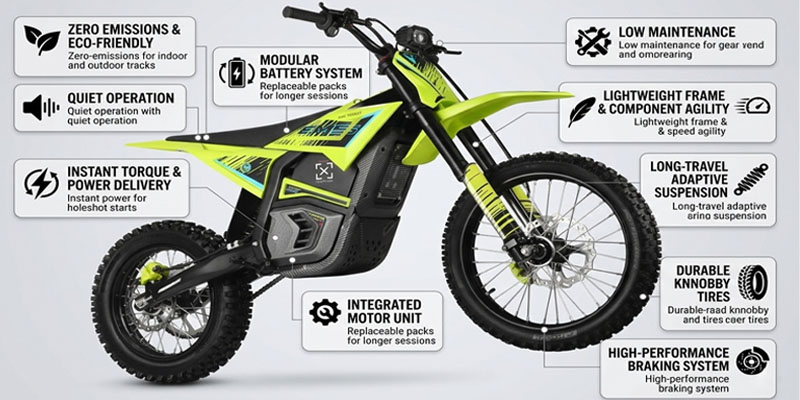
Motocross tracks demand control, punch, and tight handling. I saw riders fight clutches and stalls. I wanted clean push, easy starts, and simple upkeep. Electric bikes hit that mark.
Electric motocross bikes stand out for instant torque, smooth throttle control, light routine maintenance, and quiet operation. They use sealed motors and lithium batteries. They need no clutch or gears. They feel easy to ride, and they keep neighbors happy.
Electric motors give full torque from zero rpm. I feel the bike leap without lag. That helps with exits and short sprints. I roll on and go.
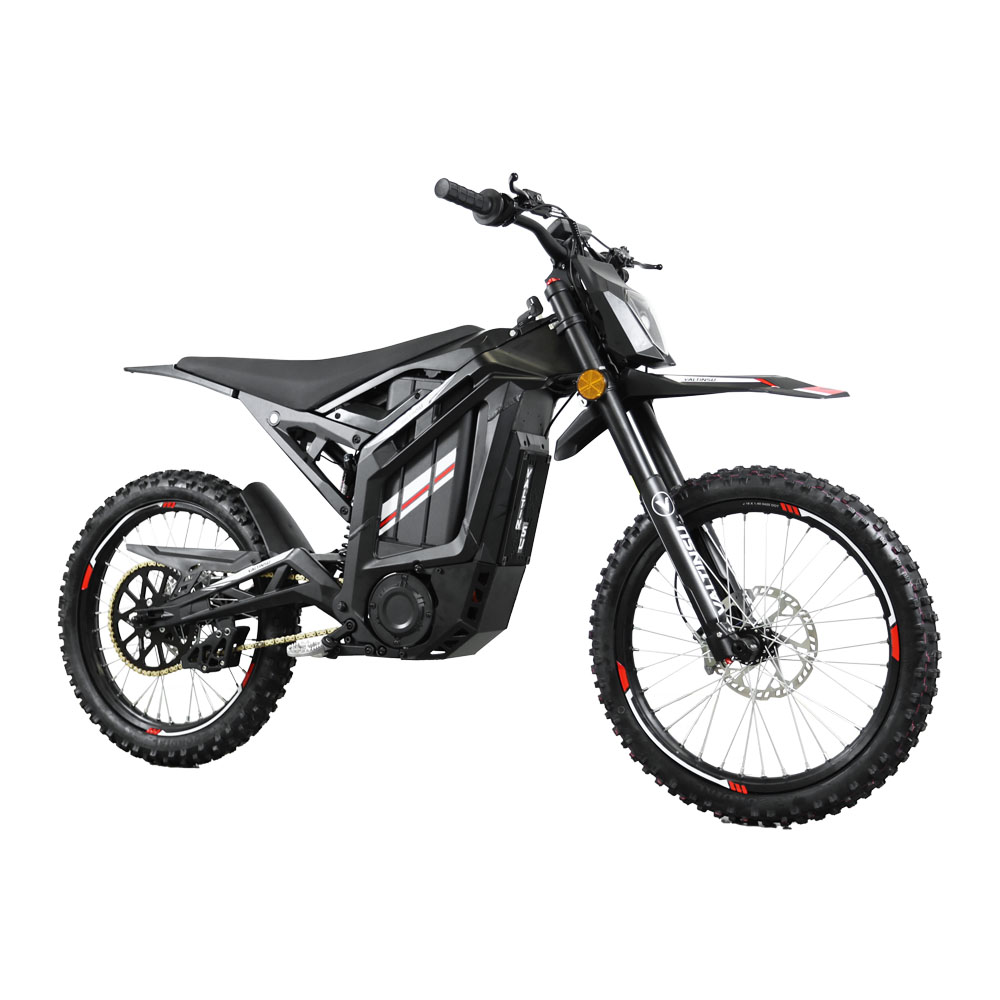
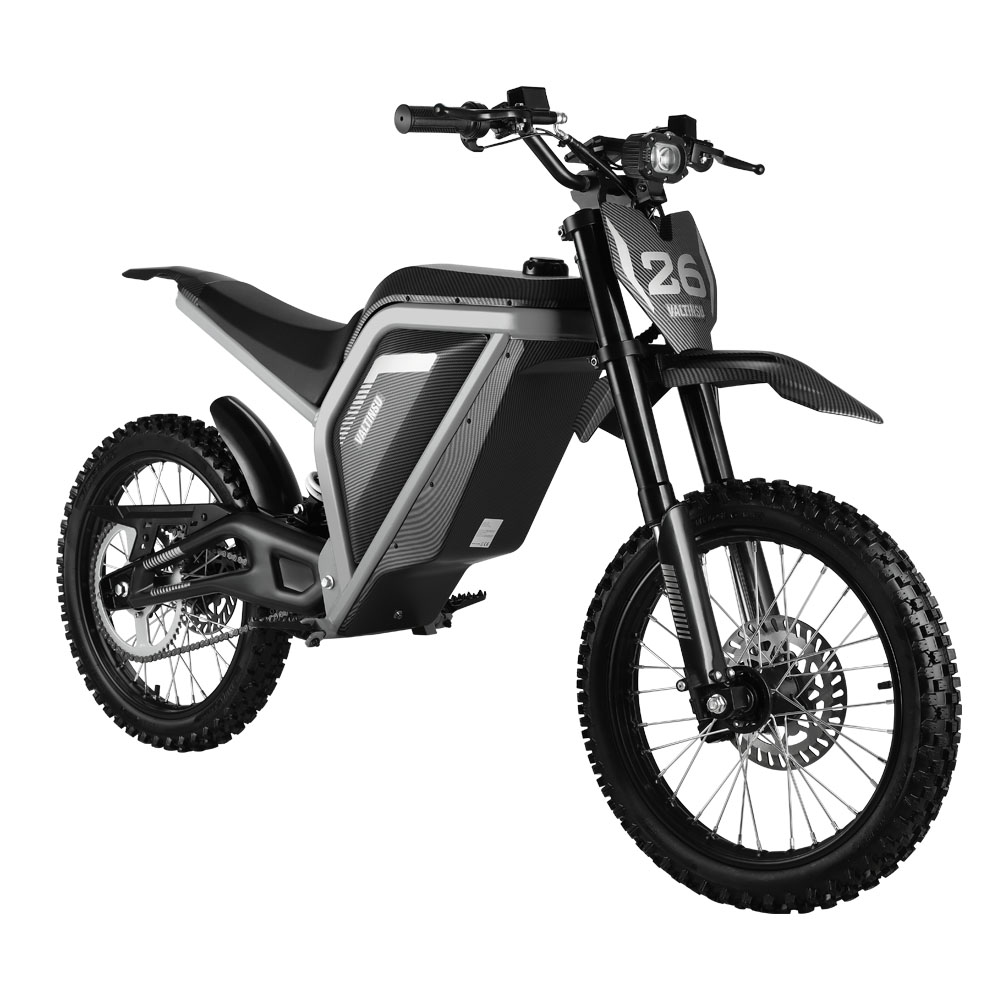
Lithium packs set power and time on track. A typical pack gives 30 to 90 minutes of hard riding. Range depends on your right hand and your track. For example, our VALTINSU EM23 has a maximum range of 80km, while the VALTINSU SS-8 has a maximum range of 120km.
Battery weight sits low. The bike feels planted in turns. Steering feels light. I can flick it fast in rhythm sections without fighting a heavy front.
I clean the chain. I check bolts. I inspect the battery and motor wiring. I skip oil changes, air filters, and top-end rebuilds. My garage time drops.
| Characteristic | Typical Value | What I Feel On Track |
|---|---|---|
| Torque delivery | Instant | Strong drive out of corners |
| Battery capacity | 3–7 kWh | 30–90 minutes at pace |
| Weight | 120–170 lb | Stable, predictable handling |
| Noise | Low | Easier practice, less fatigue |
| Maintenance | Minimal | More ride time, less wrench time |
I rode a gas for years. I loved the roar. I hated the rebuilds and fouled plugs. I moved to electric for quiet speed and simple care.
Electric Motocross bikes offer instant torque, low noise, and low maintenance. Gas bikes offer longer range, refuel speed, and broad parts availability. Electric costs more up front. Gas costs more over time. Track rules, charging access, and your style decide the better fit.
Electric feels smooth and direct. I focus on lines, not gears. Gas feels raw and busy. I play the clutch and keep the motor in the powerband.
Gas refuels in minutes. The electric needs charging or a spare pack. I bring a fast charger and plan sessions. I ride, rest, and repeat. It works for practice days.
Electric cuts routine parts. Gas needs oil, filters, pistons, valves, and plugs. I spend less time and money on electricity for regular use. I spent more upfront for the bike.
| Aspect | Electric | Gas |
|---|---|---|
| Torque | Instant | Builds with rpm |
| Noise | Very low | High |
| Range per session | 30–90 min | Hours with refueling |
| Refuel/Recharge | 30–120 min charge or swap | 5 min fuel |
| Maintenance | Minimal | Regular and deeper |
| Upfront cost | Higher | Lower to mid |
| Ongoing costs | Lower | Higher |
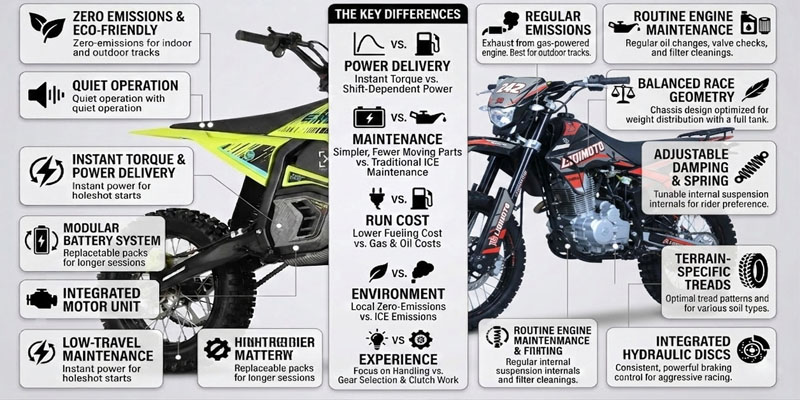
Electric motocross bikes fit learners, urban riders, coaches, and private-track owners. They suit riders who want quiet practice, instant torque, and simple care. They help families, schools, and clubs that face noise or emissions rules. They are also fun for seasoned racers who want clean speed.
No clutch, no stalls. I see students focus on body position faster. They make clean laps sooner. Confidence rises.
Quiet bikes keep neighbors calm. I run drills in small spaces. I set speed limits with apps. Safety feels easier to manage.
I can talk trackside without yelling over engines. I set repeatable drills. I cut downtime and wrench time.
| Rider Type | Need | Why Electric Helps |
|---|---|---|
| Beginner | Simple controls | No clutch, smooth throttle |
| Youth | Safety and quiet | App limits, low noise |
| Coach | Repeatable sessions | Less downtime, clear communication |
| Urban rider | Noise rules | Compliant and discreet |
| Private owner | Low upkeep | Minimal maintenance |
I love motocross tracks. I also ride woods. The two styles ask for different setups. Electric bikes now target both.
Electric motocross focuses on short laps, jumps, and quick bursts. Electric enduro focuses on longer rides, varied terrain, and endurance. Motocross needs a sharp response and light weight. Enduro needs more range, soft power delivery, and durability. Your trials and goals choose the right tool.
I watch battery tech grow fast. I see tracks add chargers. I see new race series. The ride keeps getting better and easier.
Electric motocross will gain energy-dense batteries, faster charging, better thermal control, and smarter power maps. Sound rules will push adoption. Costs will slide as parts scale. Support will expand at tracks and shops. Riders will get more choice, longer sessions, and better reliability.
Higher energy cells and solid-state tech will raise capacity and safety. Fast chargers will cut breaks. I expect 20–30-minute top-ups to cover another moto.
Better cooling and smarter controllers will sustain power. I switch maps now. I will soon adjust traction, regen, and launch with more precision.
Noise rules help electric growth. The series will add electric classes. I want local leagues to follow. Access will improve.
| Trend | Near-Term Impact | What It Means For Riders |
|---|---|---|
| Energy-dense cells | Longer sessions | Fewer swaps, more laps |
| Fast charging | Shorter breaks | Better training flow |
| Smart control maps | Tuned delivery | Easier skill progress |
| Wider support | More service points | Confidence to switch |
| Lower costs | Better value | Broader adoption |
Electric motocross bikes deliver quiet speed, low upkeep, and sharp control. Your track, range needs, and budget decide. I switched, and I ride more, with less hassle.
Smart + removable battery + gear-reduction torque = highest global demand
Fill out the form below, and we will be in touch shortly.