

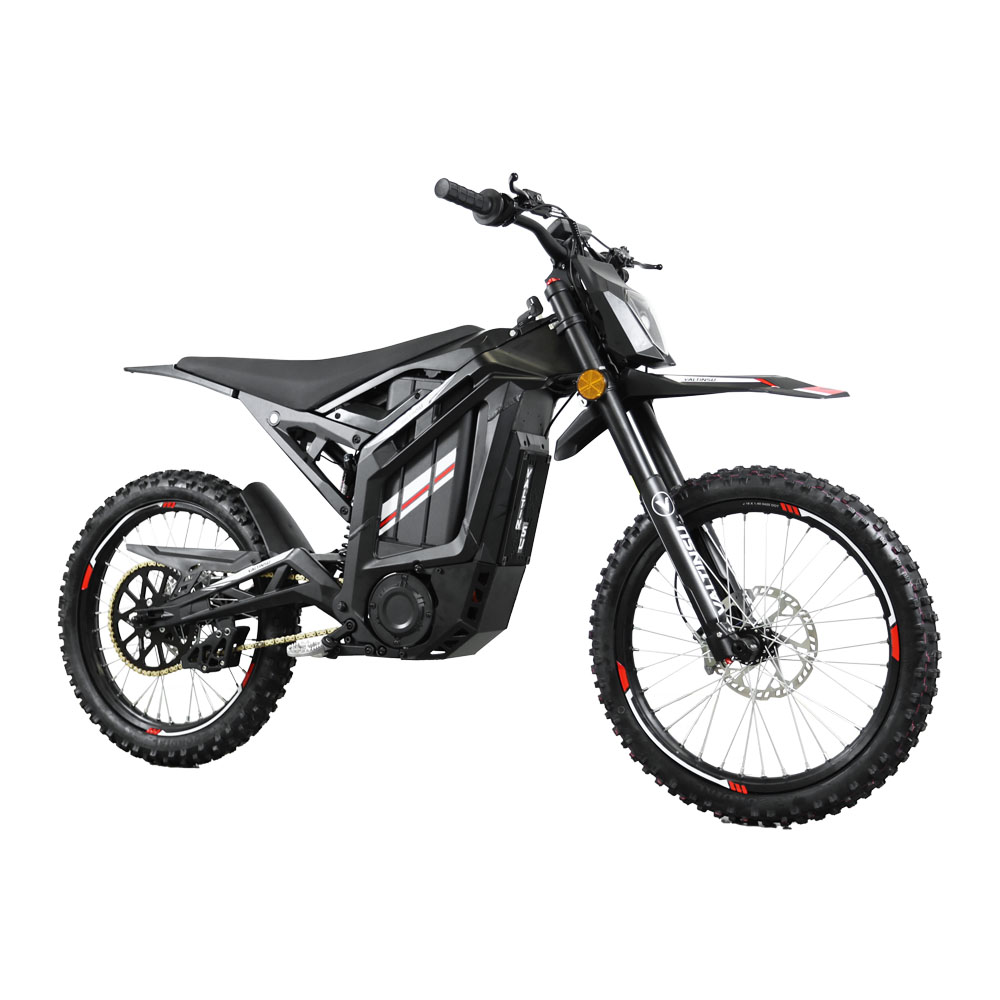

A dirt bike suspension system typically includes forks, triple clamps, rear shock absorbers, and swingarms. Although these components are not fundamental to making the bike move, they are crucial for handling and rider comfort.
High-performance motocross and enduro bikes often feature highly adjustable suspension components, with some advanced models even equipped with electronically adjustable or semi-active suspension systems.
This article will explain the function, working principles, and importance of suspension, using EM‑5 and EM‑5 Pro electric dirt bikes as practical examples.
Dirt bike suspension connects the wheels to the frame, controlling wheel movement, absorbing shocks, and stabilizing the bike.
From an engineering perspective, the suspension consists of three main parts:
The suspension mechanism allows wheels to move along a specific path, keeping tires in contact with the ground while managing forces from acceleration, braking, and uneven terrain.
A bike can technically move without suspension, but ride comfort and handling would be severely compromised.
Suspension provides:
High-performance bikes typically have stiffer settings for precise handling, while long-distance touring bikes prioritize softer setups for comfort.
Suspension directly affects handling in two key ways:
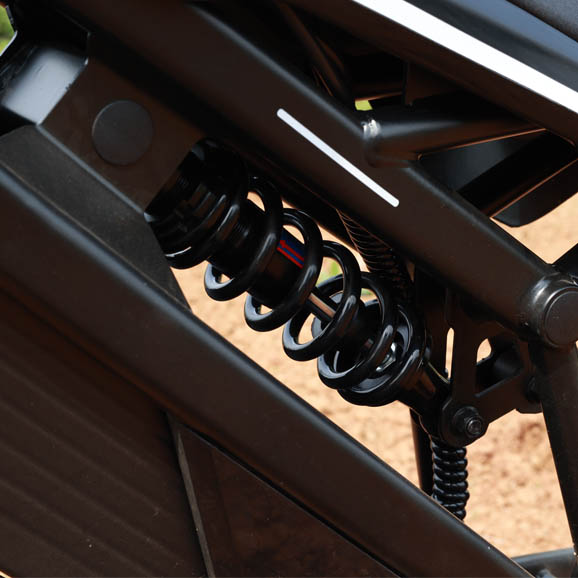
Suspension springs support the bike’s weight, compress under load, and rebound to restore the bike’s height.
Based on coil spacing, springs can be classified as:
Linear (constant-rate) springs: Uniform coil spacing, even force distribution.
Dual-rate springs: Different spacing at each end, soft initially, harder as compression increases.
Progressive springs: Gradually changing coil spacing, non-linear compression response.
Choosing the right spring type and preload ensures compatibility with rider weight and terrain conditions.
Dampers are a critical part of the suspension system, responsible for stabilizing the bike and controlling handling.
Key characteristics of dampers:
In addition to suspension, dampers are also used for steering stabilization. Steering dampers, mounted on the steering axis, reduce handlebar oscillation at high speed, improving control and rider confidence.
In a simplified suspension model:
Unsprung mass (m): wheels and lower fork components.
Sprung mass (M): bike frame, engine, and upper suspension components.
Smaller m → faster suspension response, minimal impact on the sprung mass → improved chassis stability.
Lightweight wheels and forks significantly enhance suspension performance.
Optimizing the M/m ratio is crucial for better handling and tire contact with the ground.
Reducing unsprung mass allows the suspension to react quickly to bumps without disturbing the upper chassis, improving traction and control.
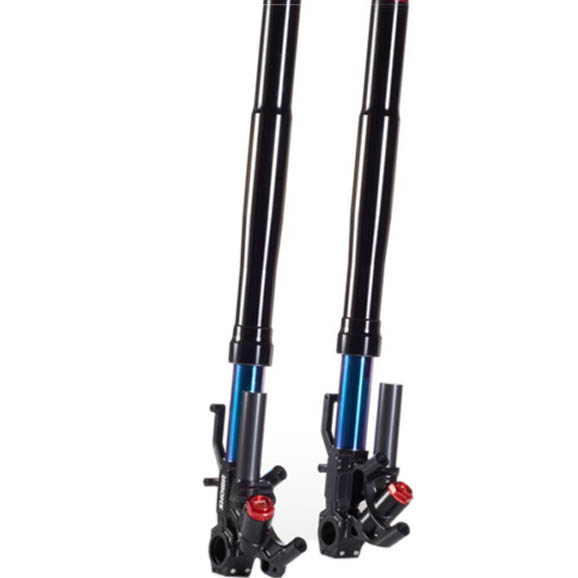
Dirt bike forks are generally classified into conventional (upright) forks and inverted (upside-down) forks, both using a telescopic design:
Core components include: upper and lower triple clamps, inner and outer fork tubes, springs, dampers, seals, and dust caps.
The triple clamp (or yoke) serves as the connection between the front forks and the frame:
In inverted fork designs, the lighter unsprung mass and higher rigidity improve suspension responsiveness and tire contact, especially on high-speed or rough terrain.
Outer tube: slides over the inner tube, houses damping oil, and provides mounting points for brake calipers and axle.
Inner tube: treated for hardness, corrosion resistance, and low friction; often anodized or gold-coated in performance models.
Forks not only absorb bumps but also provide precise steering response.
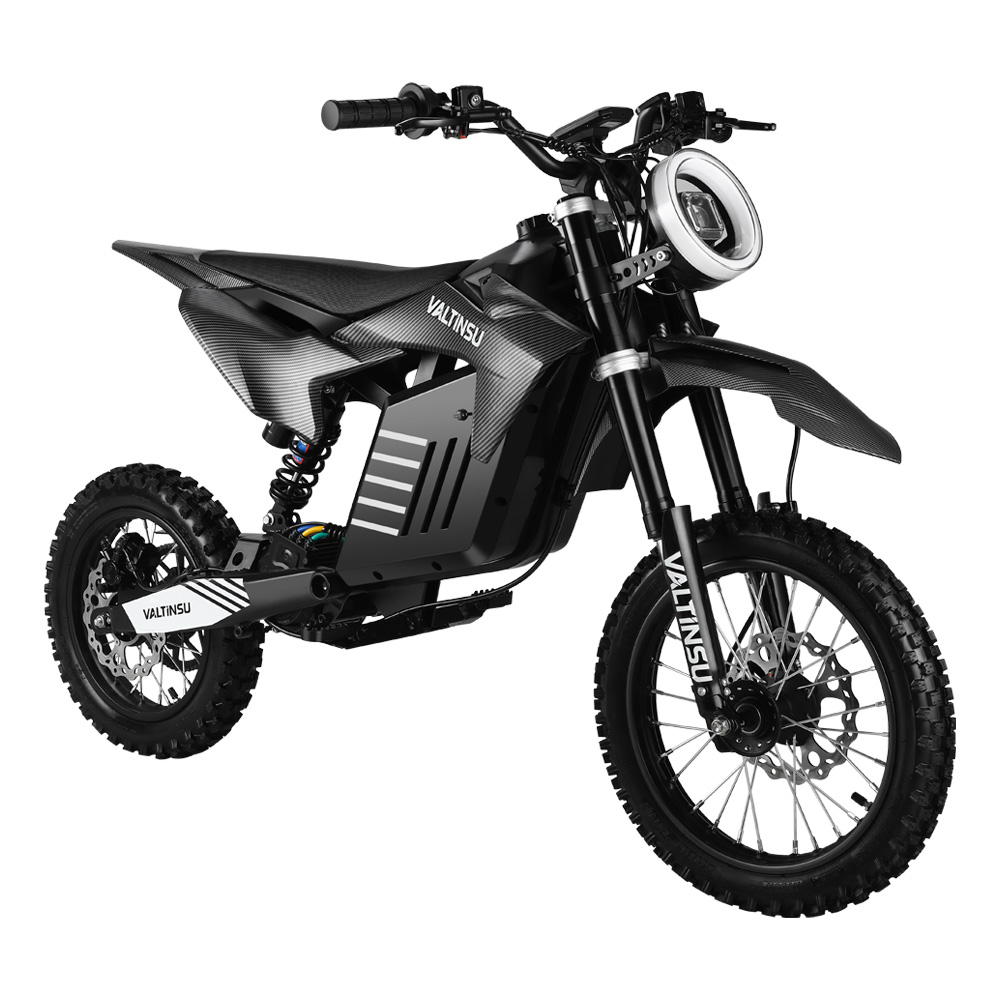
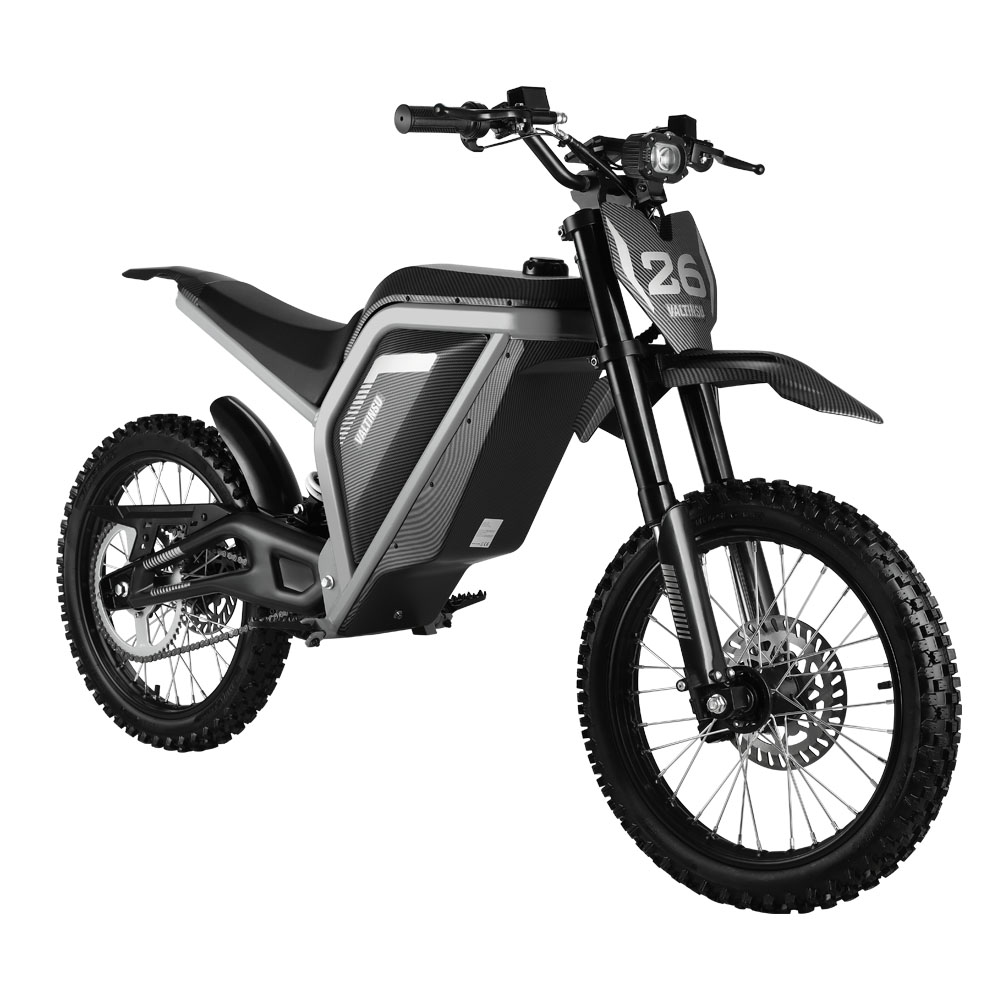
| Model | Front Suspension | Rear Suspension | Notes |
|---|---|---|---|
| EM‑5 | Hydraulic front fork | Hydraulic rear shock | Standard non-adjustable setup, suitable for general off-road riding |
| EM‑5 Pro | Inverted hydraulic front fork, adjustable light/stiff | Hydraulic rear shock, adjustable light/stiff | Optimized unsprung mass, improved handling at high speed, better climbing and cornering performance |
The EM‑5 Pro’s suspension geometry and optimized unsprung mass deliver quick response, improved tire contact, and greater chassis stability on rough terrain, making it ideal for riders seeking high-performance electric off-road riding.
Compared to gas motorcycles, electric dirt bikes have unique suspension requirements:
Even non-adjustable suspensions must be precisely tuned for spring stiffness, damping, and unsprung mass to ensure traction, comfort, and control.
Riders often make errors when adjusting or using suspension:
Proper suspension setup focuses on:
Suspension is the core of dirt bike performance, directly affecting tire grip, chassis stability, and rider comfort.
By optimizing springs, dampers, unsprung mass, and fork type, electric dirt bikes like EM‑5 and EM‑5 Pro achieve excellent handling and comfort across various terrains.
Understanding suspension principles allows riders to make informed tuning or upgrade choices, maximizing both safety and performance on trails, tracks, or mountain rides.
Lightest and easiest to control, perfect for teens and casual riders
Smart + removable battery + gear-reduction torque = highest global demand
Fill out the form below, and we will be in touch shortly.